
Stop watching your purchasing power leak through the pipes and start engineering a liquidity system that outruns the economy.
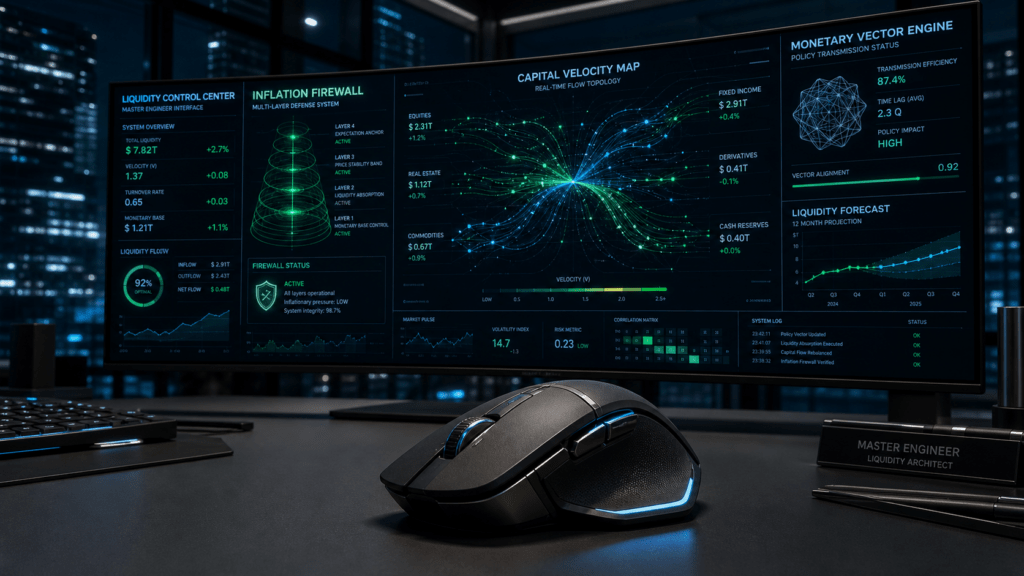
I’ve spent fifty years in the trenches of military intelligence and high-level tech engineering. If there is one absolute truth I’ve carried into 2026, it is this: money is just data with an attitude.
When you treat your financial data with a casual, “chatty” attitude, you’re asking for trouble. In my service days, we didn’t just hope the equipment worked; we engineered fail-safes for when the environment turned hostile.
Right now, the economic environment is hostile. Inflation isn’t just a headline on the evening news—it is a leaky pipe in your financial server array, and it’s draining your capital while you sleep.
The 50-Year Perspective: Static Data is Dying Data
In the tech world, if your data is static while the network is dynamic, your system is already failing. The economy is the ultimate dynamic network, and inflation is the termite eating your floorboards.
Most folks think a “safe” savings account is a fortress. In reality, it’s a paper umbrella in a hurricane. If your money is just sitting there, it isn’t “safe”—it’s losing purchasing power by the second.
To survive, you have to move from a “stashing” mindset to an “engineering” mindset. You need a high-velocity liquidity system that anticipates the storm instead of just getting wet.

The Anatomy of a Weak Prompt: Stop Guessing
Most people approach AI like a magic 8-ball. They ask generic questions like “How do I protect my money from inflation?” and expect professional-grade strategy.
That dog won’t hunt. When you ask a generic question, you get “AI-generated fluff” that tells you to buy gold or skip your morning latte. That isn’t strategy; it’s a slow-motion disaster.
If you don’t provide the engine with context, authority, and constraints, it will give you surface-level patterns. Following those patterns in a high-inflation environment is a one-way ticket to a depleted runway.
The Master Engineer’s 5-Part Fix: Engineering the Hedge
To build a real financial firewall, you have to move from “asking” to “directing” a logic engine. My framework turns a chatbot into a Senior Forensic CFO who works for you.
You start by defining a precise Role. You aren’t talking to a bot; you’re directing an Inflation Strategist. You give it a surgical Task, like conducting a forensic purchasing power audit.
Then you provide the “data with an attitude”—your burn rates, yields, and projected markers. You demand a specific Format, like a risk-ranked liquidity table, and set hard Constraints to keep it legal and defensible.
Technical Walkthrough: The “Pro” Inflation Prompt
A “Weak” prompt asks: “What should I buy when prices go up?” A “Pro” prompt engineers a model. It calculates real-time, inflation-adjusted returns based on your specific capital weightings.
When you use the 5-Part Fix, the AI stops guessing and starts modeling. It identifies the “invisible leaks” in your reallocation strategy that a standard query would miss entirely.
This is the difference between having a map and having a GPS that knows where the road is washed out. You need the logic to be sound before you trust the numbers.
Strategy vs. Volume: Why Systems Beat Luck
I’ve learned that in any complex system, better systems always beat more information. You don’t need another news alert; you need a better filter for the data you already have.
If you cannot engineer the prompt yourself, you cannot trust the financial data the AI returns. It’s that simple. You have to own the gears, or the gears will eventually own you.
Don’t borrow trouble by relying on luck. Use the “Master Engineer” mindset to build a system that protects your legacy regardless of what the Fed does next.
Next Steps: Get the Blueprint
Precision is the only hedge against chaos. You can keep letting the inflation termite eat your floorboards, or you can build a firewall that holds.
Stop settling for generic AI “hallucinations” that leave your hard-earned capital at risk. It’s time to move from “stashing” to “engineering” with professional-grade precision.
If you want the exact 5-part framework I use to engineer these high-stakes results, grab the Fix My Prompt Pro guide for $7. It’s the cost of a single coffee to protect a lifetime of data.