
Stop settling for a stagnant portfolio and start engineering high-velocity rebalancing triggers that keep your capital in the fast lane.
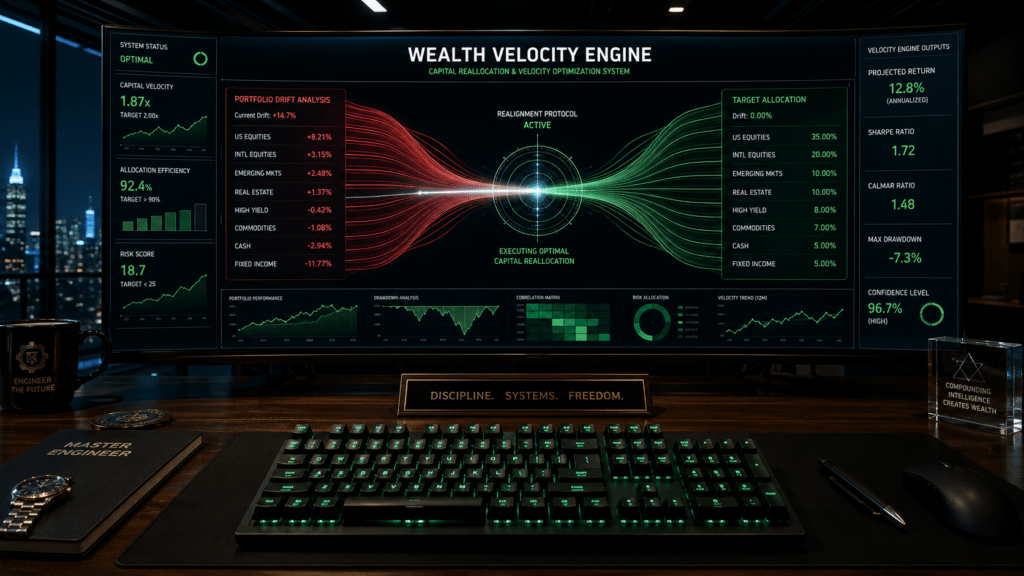
I’ve spent the better part of fifty years in the trenches of military intelligence and high-level tech engineering. Five decades in the trenches have brought me to one inescapable conclusion: capital is nothing more than digital information with a chip on its shoulder.
Managing your wealth is no different than maintaining a high-stakes server array. Both require regular rebalancing to avoid total system failure when the workload spikes.
If you don’t own the system, the data owns you. My mission today is to move you from “guessing” when to buy or sell to “engineering” precise triggers that keep your capital moving.
The Anatomy of a Weak Prompt: The “Guessing” Game
Most folks approach AI like it’s a magic eight-ball. They ask generic questions and then act surprised when the advice is as thin as a paper-mill paycheck.
Asking “When should I sell my stocks?” or “Is my portfolio safe?” is a recipe for disaster. That just won’t hold water.
Following generic financial patterns leads to a massive drop in utility. You’re essentially asking a calculator to “be smart” without giving it any numbers to crunch.

The Master Engineer’s 5-Part Fix
To get professional results, you must move from “asking” to “directing.” My framework relies on five specific pillars to turn a chatbot into a senior portfolio architect.
First, you define the Role. You aren’t talking to a clerk; you are directing a Senior Portfolio Strategist with a background in hedge fund logic.
Second, the Task must be surgical. You want a forensic rebalancing map based on specific percentage drifts, not a generic “feel-good” summary.
Third, give it the Context. This is where you provide the “data with an attitude”—your exact asset weights, current market volatility, and your specific tax-loss harvesting goals.
Fourth, dictate the Format. Demand a risk-ranked table or a technical execution plan that you can actually use at the brokerage desk.
Finally, set the Constraints. Tell the engine to avoid wash-sale violations and stay strictly within legal, defensible boundaries.
Technical Walkthrough: The “Pro” Rebalancing Prompt
When you apply this 5-part framework, the conversation changes instantly. You stop talking to a bot and start directing a logic engine.
A “Pro” prompt looks like this: “Role: Senior Hedge Fund Architect. Task: Create a rebalancing map for a $1M portfolio. Context: 60/40 Equity-Bond split, currently drifted to 75/25. Format: Risk-ranked execution table.”
This engineered approach identifies triggers that generic queries miss entirely. It’s the difference between guessing the weather and owning the radar station.
Strategy vs. Volume: Why Systems Beat Luck
In 2026, you don’t need more information; you need better filters. Managing wealth requires a “Master Engineer” mindset—better systems over more volume.
If you cannot engineer the prompt yourself, you cannot trust the financial data the AI returns. Relying on luck is a fine way to lose your shirt.
I’ve seen markets turn on a dime too many times to trust anything but sound logic. Systems beat luck every single day of the week.
Next Steps
Stop settling for “okay” AI results that leave your hard-earned capital at risk. Precision is the only hedge against the chaos of a modern market.
If you want the exact blueprint I use to engineer these high-velocity systems, you need to grab the Fix My Prompt Pro.
It’s a small $7 investment—about the cost of a cup of coffee—to protect thousands in mismanaged capital. Don’t borrow trouble by waiting; get your logic sorted today.